Fleet and commercial vehicle cleaning: what managers should know
Businesses that run vans, trucks or service vehicles often treat cleaning as an afterthought, yet a clean fleet affects safety, driver comfort, customer impressions and vehicle resale value. This page explains how fleet cleaning is usually organized and what to ask a provider. It is general information and does not offer services.
Why fleet cleaning matters
Dirt and road salt accelerate corrosion and wear on paint, glass and seats. Clean cabs make inspections easier, reduce driver complaints and help vehicles keep their value when they leave service. Some managers also note small fuel savings from removing excess weight and film, but the effect is minor compared with maintenance and driving habits.
Common service types
- Interior and exterior cleaning. Regular washing, vacuuming and wipe-downs of cabs and cargo areas on a set rotation.
- Protective finishes. Sealants or coatings on high-visibility vehicles to make washing easier and slow fading.
- Odor removal. Treatments for smoke, spills, food and animals; see ozone odor treatment.
- Biohazard cleanup. Disinfecting after exposure to bodily fluids or similar contamination is specialist work with safety rules; ask any provider about training, protective equipment and disposal.
- Waterless options. Low-water products are useful where water is restricted or unavailable, though heavily soiled vehicles still need a traditional wash.
Scheduling
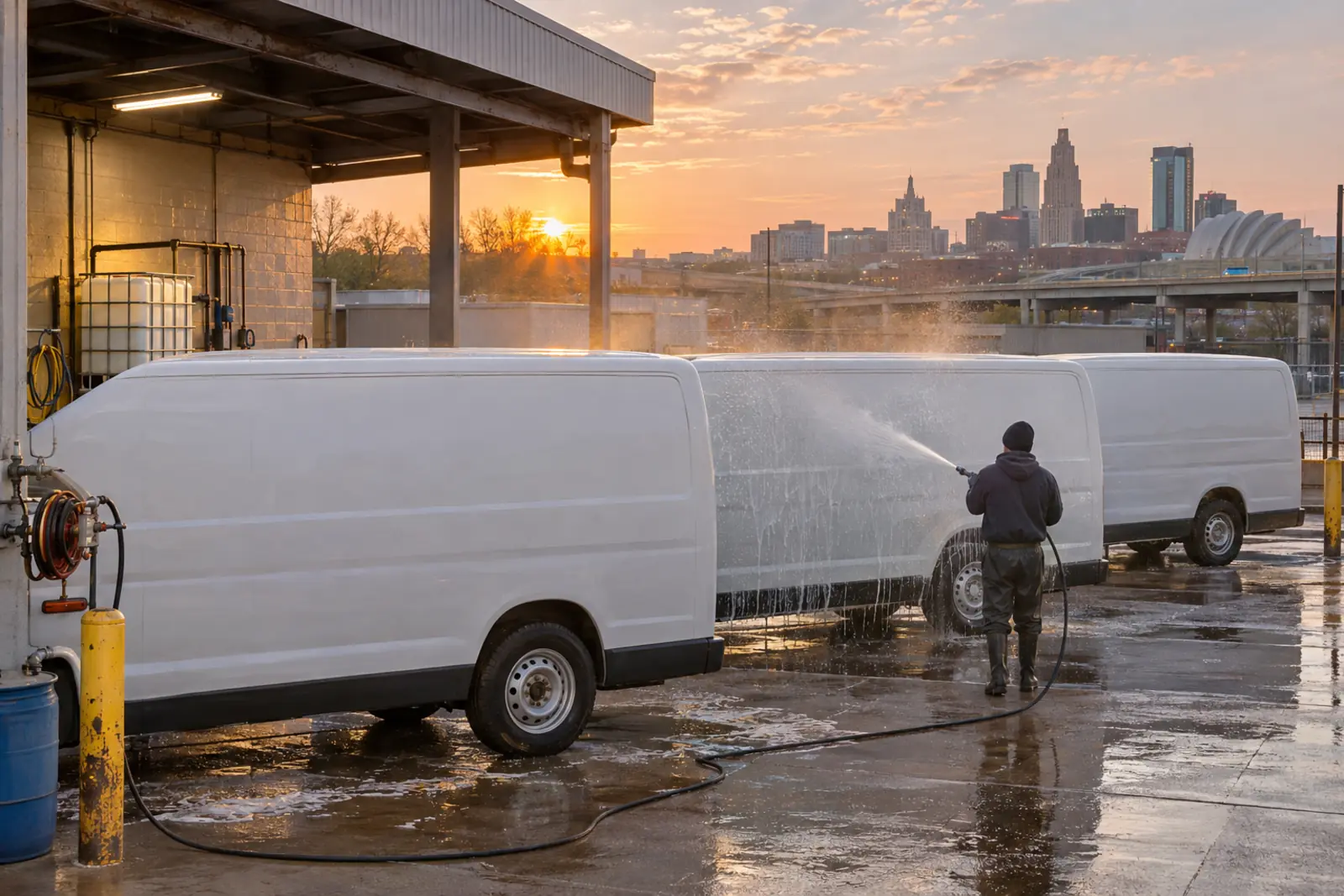
Fleet work is commonly arranged after hours at the depot so vehicles are not taken out of service. When comparing providers, ask whether they can work at your site, how many vehicles they can handle per visit and what they need in terms of water and power. The article on mobile detailing vs. a shop covers the practical differences, and truck and SUV detailing covers larger vehicles.
Questions to ask
- Is pricing per vehicle, per size class or per visit, and what is included?
- What insurance does the provider carry for work on your vehicles and premises?
- How are quality checks and re-dos handled?
- Can the provider supply a written scope and a recurring schedule?
Verify all costs with the provider, since they depend on vehicle type, condition and frequency.