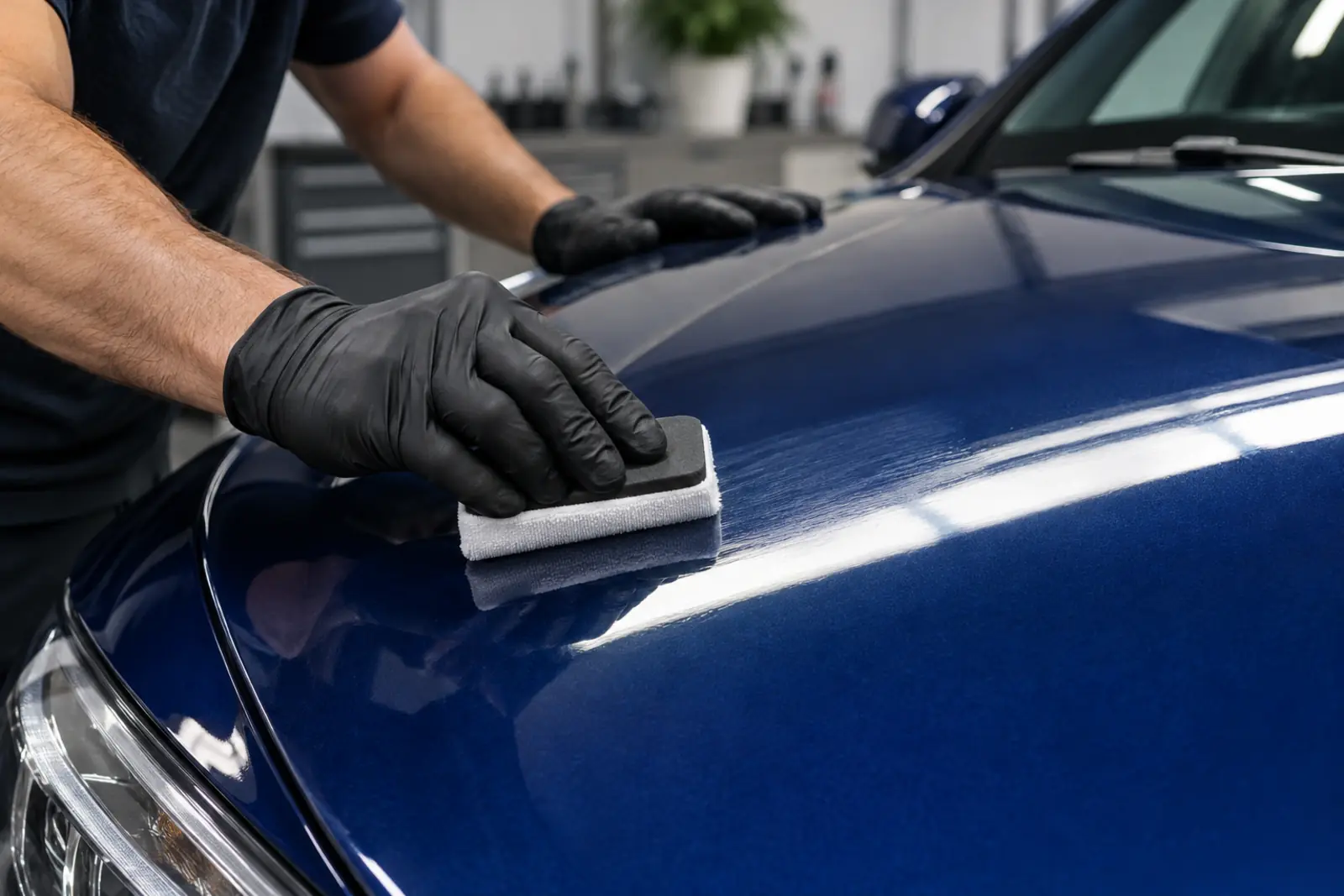
Ceramic coating: what it is and what it is not
A ceramic coating is a liquid, usually silica-based product that is applied to paint and cures into a thin, hard layer. It adds gloss, makes the surface slicker so dirt and water release more easily, and gives some resistance to light chemical contamination. It is often described as a long-lasting alternative to wax, but it is not a force field: it does not stop stone chips, deep scratches or dents, and it still needs washing.
In short, a ceramic coating for cars is a sacrificial protective layer on top of the clear coat, not a replacement for it and not a repair. It makes paint easier to keep clean and shields it from mild environmental damage for longer than most waxes. It cannot make bad paint look good, and it cannot make careless washing safe.
What a ceramic coating does and does not do
What it does
- Deepens gloss and color by leaving a smooth, hard, clear layer on the surface
- Repels water and makes road film, bugs and bird droppings easier to wash off
- Adds some resistance to light chemical contamination, such as road film and bird droppings
- Lasts longer than a typical wax or sealant, although real durability depends on the product, the preparation and how the car is washed
What it does not do
- It does not stop stone chips, deep scratches, door dings or dents. Physical protection is the job of paint protection film, a thermoplastic urethane film that, according to Wikipedia's article on the product, is designed to guard against stone chips, bug splatter and minor abrasions. See PPF vs. ceramic coating for a direct comparison.
- It does not make a car self-cleaning. A coated car still collects dirt and needs regular washing.
- It does not remove existing swirl marks, oxidation or etching. These need polishing before coating, as covered in car paint oxidation.
- It does not make water spots impossible. Hard water left to dry can still leave marks, as explained in the guide to hard water spots on car paint.
Ceramic coating vs. wax and sealant
Wax and synthetic sealants sit on top of the paint and wear away relatively quickly, so they are reapplied often. A ceramic coating is designed to bond to the surface and stay for much longer, which is why it takes more preparation and is harder to correct if applied badly. Neither product protects against physical damage the way a film does. For new vehicles, new car paint protection options lays out how coating, sealant and film fit together.
Preparation decides the result
A coating locks in whatever is under it, so the paint must first be washed, decontaminated and, in most cases, polished. Skipping correction can seal swirl marks under the coating. A typical process includes:
- Wash and chemical decontamination, including an iron remover and clay
- Paint correction appropriate to the condition of the finish
- A panel wipe to remove polishing oils
- Coating application in thin layers, in controlled conditions
- Curing time during which the car must stay dry and clean
Read more in the guides to paint decontamination and paint correction.
Reading the claims on the bottle: "9H" and "10-year" coatings
Marketing for ceramic coatings often quotes a "9H" hardness rating. This borrows from the pencil hardness test, which Wikipedia describes as the grade of the hardest pencil that does not permanently mark a coating. The same source notes that pencil grades give a relative rating for a series of coated panels and cannot be used to compare the hardness of different coatings. A "9H" label alone therefore does not prove that a coating resists scratches from a brush wash or a dirty wash mitt.
Durability claims deserve the same caution. Life depends on the product, how well the paint was prepared, how much sun and road salt the car sees, and how it is washed. Treat a number of years as the maker's claim, and look for what the warranty actually requires and excludes.
Glass, plastics and headlights
Some coating products are made for glass, trim and wheels, and headlights are often restored before they are sealed. Ask which surfaces are included, and check headlight restoration before paying for add-ons.
Maintenance
Coatings last longer with regular, gentle washing and periodic maintenance products. Many manufacturers recommend an annual inspection or maintenance wash to keep the warranty valid. See the guide on caring for a ceramic coating in Kansas City for washing methods and products.
Questions worth asking
- What product is it, and what does the manufacturer's warranty require?
- How much correction is included, and how will paint thickness be checked?
- How long must the car stay dry afterward, and which wash products are safe?
- Is the durability claim in writing, and what does it exclude?
Prices vary by installer and vehicle, so verify them with the provider. The checklist on preparing for a detailing appointment covers what to have ready before the car goes in.
Frequently Asked Questions
What does a ceramic coating do for a car?
It adds a thin, hard, glossy layer that repels water, makes dirt release more easily and adds some resistance to light chemical contamination. It makes washing easier. It does not repair damage already in the paint.
Does ceramic coating protect against scratches?
Not in a way you can count on. It will not stop stone chips, keys, shopping carts or deep scratches. If physical protection is the goal, paint protection film is the product designed for that job.
Is a ceramic coating better than wax?
For durability and ease of cleaning, usually yes, because a coating is designed to last far longer than wax. Wax is cheaper and easier to apply and remove, which suits owners who enjoy frequent upkeep. The right choice depends on how long you want protection to last and how much preparation you will pay for.
Can a ceramic coating be applied over scratched or swirled paint?
It can be, but the flaws will be sealed in and stay visible. Paint is normally polished first so the coating locks in a clean finish, which is why correction is a major part of the process.
Do you still need to wash a ceramic-coated car?
Yes. The coating makes washing easier, but dirt, road film and water minerals still build up. Gentle, regular washing is what keeps the coating working as intended.