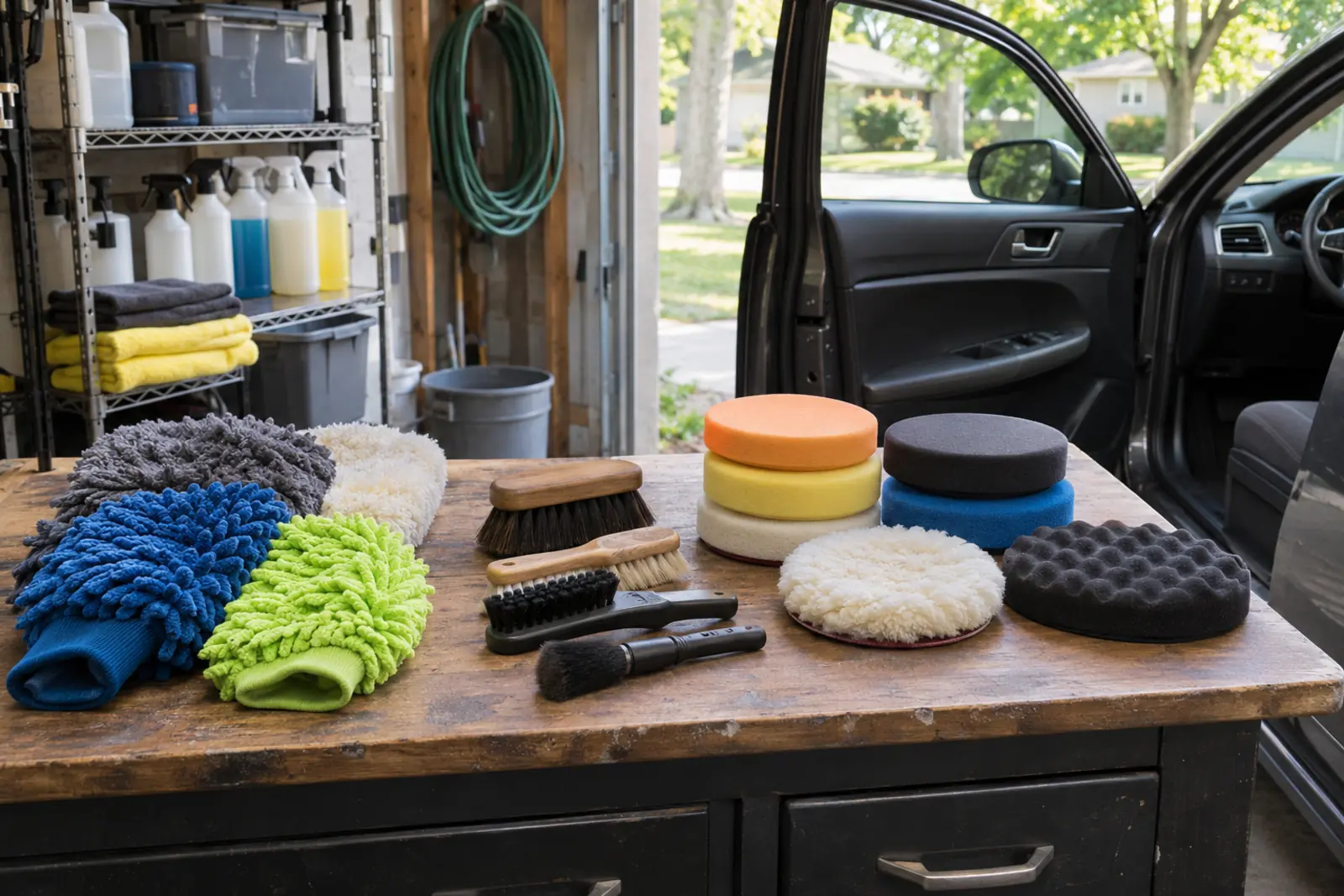
Detailing services, explained
This page is a plain-language map of what detailers commonly offer, and what each service is meant to accomplish. It describes the work in general terms; the site itself does not perform it.
Interior detailing
A thorough interior detail typically follows a sequence: vacuuming every crevice, steam or hot-water extraction for carpets and fabric, wiping and decontaminating hard surfaces and vents, then conditioning leather, vinyl, plastic and rubber with a protectant that resists fading from sunlight. A final inspection in good light catches missed spots. For specifics, read the interior detailing guide, and for smoke or animal smells see pet hair and odor removal and ozone treatment.
Exterior detailing
The exterior sequence usually runs from a careful wash to chemical and physical decontamination: an iron remover dissolves embedded metal particles, and a clay bar lifts bonded grit. Afterward the paint is protected with carnauba wax or a synthetic sealant, with longer-lasting options discussed below. See paint decontamination and hard water spots.
Paint correction
Machine polishing removes a thin layer of clear coat to level out swirl marks and light scratches. It is a skilled job, and the result depends on the paint thickness and the technician. Read what paint correction is and when it is needed.
Protection
Wax and sealant are short-term options; ceramic coatings and paint protection film are longer-term and more expensive. The guides on ceramic coating, PPF vs. ceramic and new car protection compare them.
Add-ons
Prices
Detailing prices depend heavily on vehicle size, condition, products and location, so any number found online is only a rough reference. Ask a provider for an itemized scope and compare what is included, not only the total.